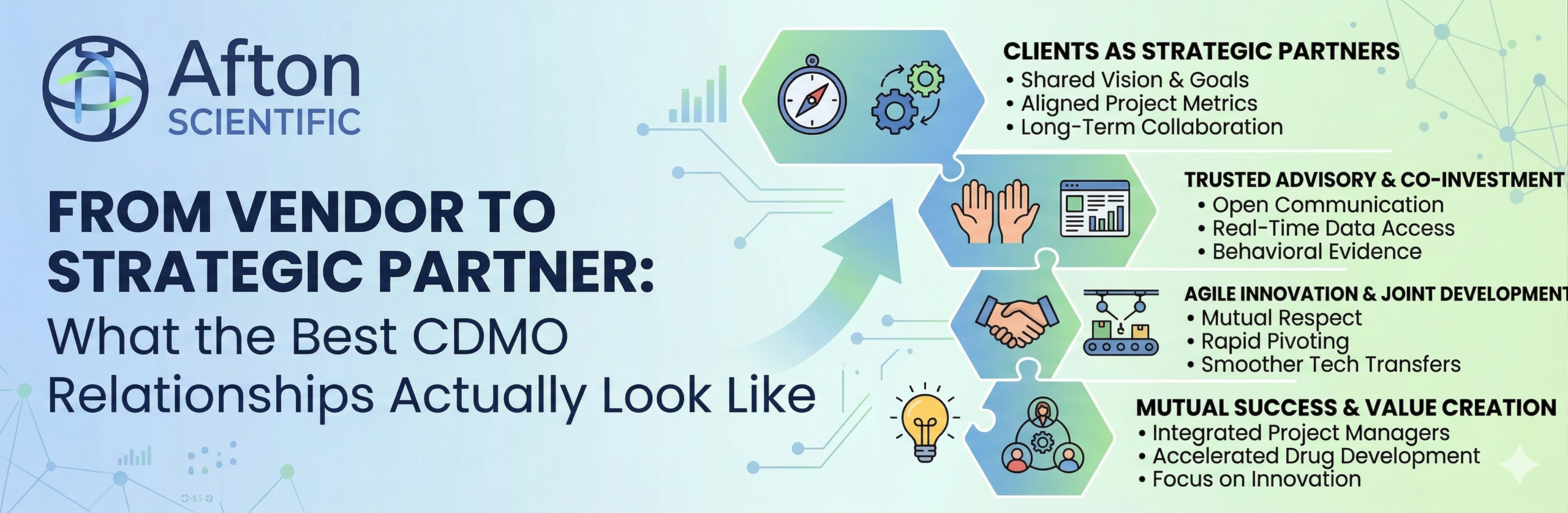
Strategic partnerships in the pharmaceutical industry, a response to the increasing complexity and innovation, have evolved from transactional engagements into collaborative alliances. These alliances not only drive mutual value, speed, and innovation but also unlock new market opportunities, mitigate risk, and enable excellence in time-to-market. This optimistic outlook is a result of the significant benefits these partnerships bring, including accelerated innovation and enhanced market opportunities.
The Evolving CDMO-Client Landscape
Over the past decade, the CDMO industry has undergone a significant shift from service-provider models to strategic partnerships based on shared objectives. While sponsors once sought vendors who could manufacture to spec, today’s expectation is for far deeper engagement—where partners contribute not only operational capacity but novel thinking, co-investment, and risk-sharing. This new paradigm addresses the growing complexity in regulatory requirements, supply chain pressures, and the rapid expansion of biologics and personalized medicines. For both CDMOs and their clients, strategic alignment and integration are increasingly essential to remain competitive and innovating rapidly in the evolving pharma marketplace.
The Business Case for Strategic Partnerships
Strategic client partnerships transform the pharmaceutical value chain in ways transactional relationships cannot. Through long-term collaboration, both parties can:
- Accelerate drug development with shared expertise, especially in advanced analytical and manufacturing methods.
- Decrease risk by establishing aligned incentives, transparent communication, and robust governance.
- Achieve faster regulatory approvals, smoother tech transfers, and greater supply chain resilience via ongoing support and open information exchange.
Strategic client partnerships are not just a model, but a strategy that allows clients to leverage specialized expertise—such as high-throughput chromatography and digital laboratory data systems—at the earliest possible moment, preventing costly downstream delays. These partnerships ensure successful project outcomes and enable both CDMOs and sponsors to focus their resources on innovation, rather than crisis management.
Pillars of a Successful Partnership
In a highly regulated and dynamic industry, several factors define the best CDMO-client partnerships. These pillars include strategic alignment, trust and transparency, operational fit, flexibility, and responsiveness. Each of these critical factors plays a role in fostering a successful and enduring partnership.
- Strategic Alignment ensures that both organizations share vision and goals, align on key project metrics, and agree on what success looks like, from clinical development through commercial launch.
- Trust and Transparency: Open, two-way communication and real-time data access are the bedrock of every successful engagement. The emphasis on trust and transparency not only reassures both parties that they are in a reliable partnership but also instills confidence in the process.
- Cultural and Operational Fit: Effective partnerships are built on mutual respect, adaptability, and a shared commitment to learning and improvement, values that should be evident at every touchpoint, from the leadership team to Quality Assurance to Operations.
- Integrated Governance: Project managers, business leaders, and escalation teams handle both routine matters and unexpected challenges collaboratively rather than with adversity.
- Commitment to Patient Impact: Ultimately, partnerships that center on the end patient drive better decisions and foster greater engagement across both teams.
- Flexibility and Responsiveness: The most valuable partnerships are those that can pivot rapidly, for example, flexible scheduling when programs are delayed or need faster turnaround.
Building a successful CDMO partnership begins with extensive early engagement, which involves defining objectives, mutual expectations, and conducting technical due diligence. This emphasis on early engagement not only prepares both parties for a successful partnership but also instills a sense of proactivity and preparedness. This proactive approach to early engagement is a key factor in preparing for successful partnerships, instilling a sense of readiness and preparedness.
Building and Sustaining the Partnership: Sponsor’s Checklist
Identifying a genuine partner requires more than reviewing a CDMO’s capabilities deck. Sponsors should probe for behavioral evidence during the evaluation process itself.
Start by evaluating project management structure. Ask whether your program would have a dedicated project manager or whether that role is shared across multiple accounts. Ask about that person’s background, whether they have scientific or manufacturing experience, not just administrative. A PM who understands the technical context of your program is better equipped to anticipate problems and communicate meaningfully about what’s happening on the floor.
Next, test for transparency under pressure. Rather than asking general questions about communication, ask the CDMO to describe a specific deviation or unexpected challenge from a recent program, what happened, when the sponsor was notified, and how it was resolved. The quality of the answer matters as much as the content. A CDMO that can speak openly about a difficult situation, including what they would do differently, demonstrates the kind of self-awareness and accountability that defines a true partner.
Finally, ask for references from programs that encountered significant challenges, not just successful ones. Any CDMO can provide a reference from a satisfied client whose program ran smoothly. The more revealing reference is from a sponsor who faced a serious obstacle mid-program and still came out confident in the relationship. How a CDMO behaves when things go wrong is the most reliable indicator of how the partnership will hold up over time
“The way we’re structured, the project manager isn’t a middleman. They’re embedded in the program. That means they know the science, the timeline, and what’s at stake for the client. That makes a big difference for our clients – they trust that the PM and the rest of our team are just as invested in success as they are.”
- David Pereira, Chief Operating Officer, Afton Scientific
At Afton Scientific, this model is reflected in how programs are structured from the first conversation. Each client works with a dedicated project manager embedded in the program who maintains continuity from early development through commercial launch. That single point of contact simplifies communication and ensures nothing falls through the cracks between functions. But single point of contact does not mean limited access: clients have direct visibility to senior leadership throughout the program, and leadership remains actively involved, not as an escalation option of last resort, but as genuine participants in program success.
The structure is built for clarity from day one. Programs begin with a formal kick-off meeting that brings together the sponsor and Afton’s team to align on the full timeline, assign ownership of each workstream, and establish the communication cadence going forward. From there, regular weekly or bi-weekly calls keep both teams synchronized, surface issues early, and maintain shared accountability for what’s ahead. Communication is proactive, not reactive: sponsors receive updates when something worth knowing has happened, not only when a milestone report is due. That approach doesn’t just improve the experience of working with a CDMO; it reduces the timeline risk, cost surprises, and regulatory friction that accumulate when information flows slowly.
Navigating Challenges in Partnership Dynamics
Inevitably, even the strongest partnerships encounter obstacles. Common challenges include unforeseen manufacturing deviations, shifting project priorities, or regulatory updates. Successful partnerships are defined by their preparedness and agility in managing these risks:
- Risk Management: Proactive issue escalation paths, scenario planning, and clear documentation help resolve problems before they threaten project timelines.
- Financial Transparency: Open communication about cost drivers and business health fosters trust and enables collaboration on mutually beneficial solutions, even in the face of unexpected expenses.
- Sustaining Relationships Through Change: Leadership turnover or market disruption can destabilize projects; therefore, robust governance structures and shared project histories are crucial for resilience.
The Next Generation of Strategic Partnerships
The dynamics of CDMO partnerships will continue to evolve as new technologies and business models mature.
- Digital Transformation: Artificial intelligence, predictive analytics, and end-to-end data sharing will define the next frontier for operational transparency and decision-making speed.
- Outcome-Based Partnerships: Emerging partnership models are beginning to tie performance incentives to measurable program outcomes, including on-time batch release, right-first-time manufacturing rates, and supply continuity commitments, shifting the focus from activity-based contracting to shared accountability for results.
- Integrated Project Teams and Automation: Borderless, multidisciplinary teams will use advanced automation and digital platforms to break down barriers between sponsors and CDMOs, speeding up every stage of drug development and commercialization.
Organizations that invest in these capabilities will set the pace for the industry’s future.
Building for Long-Term Success
The journey from transactional vendor to true strategic partner is not easy, but the rewards are significant for sponsors, CDMOs, and patients. Trust, transparency, and shared purpose form the foundation of these partnerships. As the industry evolves, organizations that adopt a partnership mindset create the most value and achieve long-term leadership.
The sponsors who treat CDMO selection as a strategic decision, not a procurement exercise, are the ones who will reach the finish line faster and with fewer surprises.
“The sponsors who get the most out of a CDMO relationship are the ones who come in looking for a partner, not just a manufacturer. When both sides are invested in the outcome, the whole program moves differently – faster, with fewer surprises, and with a lot more trust on both sides.”
- Michael Dunn, Chief Commercial Officer, Afton Scientific