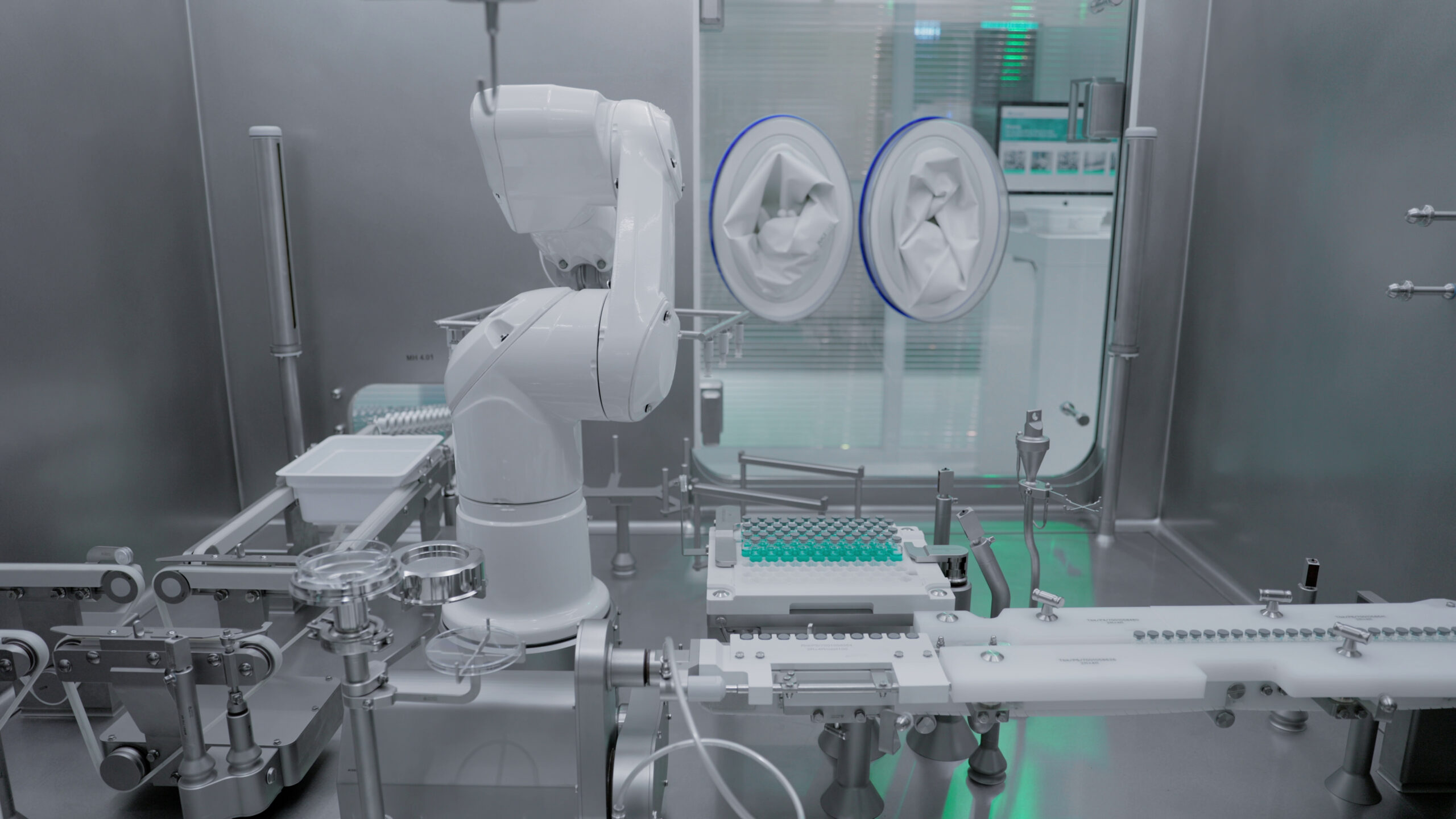
The revised Annex 1 is clear: sterility cannot be tested into a product. Manufacturers must design sterility into each step of the process, supported by appropriate controls and validation. For those focused on the visible elements of a sterile fill-finish facility (the isolators, the Grade A zones, and the robotic filling lines), that principle is easy to appreciate.
What is harder to see, but equally important, is the network of critical utilities and single-use systems running behind those cleanroom walls. Water for Injection (WFI), clean steam, process gases, differential pressure cascades, and modern closed and single-use systems (SUS) are the silent infrastructure of sterility assurance. A CDMO that engineers and qualifies these systems rigorously can deliver predictable, regulatorily confident programs. However, one that treats them as background detail is a risk.
Critical Utilities: The Invisible Foundation of Sterility Assurance
Risk should guide utility assessment. Utilities with the highest risk for contamination are those that manufacturers incorporate into the product or that contact the product directly or indirectly:
- Water used for product formulation or for equipment and component washing
- Gases or steam used for sterilization
- Gases used in drug product manufacture, such as to provide an inert headspace inside a drug container
Engineering, qualification, operation, maintenance, and monitoring teams must manage utility systems in a manner that ensures each system functions as expected. This includes:
- Non-shedding, smooth, non-porous materials of construction that can withstand the intended disinfection process.
- Trending data for critical quality attributes (CQAs) for high-risk utilities, not pass/fail testing alone.
- Qualifying and validating all design aspects to meet all requirements throughout the system life cycle, including seasonal variations.
A CDMO’s depth and continuity of utility trending data is one of the clearest windows into its quality culture.
WFI and Clean Steam: Purity in Motion
Water used in the process, whether as part of the drug product itself or as a process utility for equipment and component washing and rinsing, must meet sufficient quality standards: free of particulates, microbial contamination, and endotoxin/pyrogen, a fragment of bacterial cell walls that can cause fevers in patients if injected. Annex 1 and pharmacopeial standards require WFI to be suitable for sterile product manufacture, and taking into account its intended use.
- Manufacturers should produce WFI from source water that meets design specifications for purity, using distillation or a method that yields water of equivalent purity.
- Storage tanks must vent through bacterially retentive hydrophobic filters that allow air and gas to pass through but keep microorganisms out.
- Distribution legs should incorporate features that maintain purity, such as minimum temperatures to prevent microbial growth.
- Sloped distribution piping that allows complete draining where appropriate.
- Avoiding dead legs throughout, as stagnant sections allow biofilm to establish and endotoxin to accumulate.
- Operators should routinely disinfect or sterilize the WFI system; if they use chemical agents, they must fully flush them away before resuming normal operation.
- Maintaining turbulent flow in distribution systems to minimize the risk of microbial adhesion to pipe walls.
- Quality teams should monitor the WFI system regularly and analyze data to detect potential trends that may indicate reduced water quality.
Clean Steam
Manufacturers frequently use steam as a sterilizing agent in sterile pharmaceutical manufacturing. When they do, they must demonstrate adequate steam purity:
- The condensate of process steam must meet compendial requirements for WFI in terms of chemical purity.
- Operators must regularly assess other physical attributes of the process steam:
- Non-condensable gases: these insulate load surfaces from steam contact, reducing sterilization efficacy.
- Dryness fraction: excess moisture results in wet loads that may compromise sterility.
- Superheat: this reduces condensation and, therefore, heat transfer to the load.
- Clean steam quality should be periodically re-qualified and linked to the facility’s Contamination Control Strategy (CCS), where applicable.
Process Gases and Vacuum
Manufacturers must demonstrate adequate quality for gases they use in critical steps of the manufacturing process, particularly gases that contact the product directly. This includes controlling chemical, particulate, and microbiological contamination:
- Engineers must pay particular attention to potential oil or water contents, as these are common in industrially produced gases.
- Operators must filter gases used in aseptic processing to remove particulate and microbiological contamination, using appropriate filters with a nominal pore size of 0.22 μm or less, qualified to adequately retain microbial contaminants.
- If backflow from a vacuum or pressure system represents a potential risk to product quality, engineers must put prevention mechanisms in place and qualify them to function properly.
HVAC and Pressure Cascades
- Air must not flow from lower grade into higher-grade or more critical areas.
- Engineers should visualize air flow patterns with smoke studies to ensure these requirements are met and should conduct studies with operators performing expected actions to demonstrate that risk to the product is minimized.
- Active pressure alarms must alert operators if a pressure drop may represent a risk to the process or product.
- Any change in room utilization requires re-evaluation and, where appropriate, requalification to confirm that the pressure cascade remains intact.
Closed Systems and Single-Use Systems
Why Closed Systems and SUS Matter
Closed systems consist of pre-sterilized processing lines and can reduce contamination risk. Single-use systems (SUS) are disposable, one-time use systems that manufacturers can employ instead of reusable systems, with multiple advantages including:
- Reducing the need to perform cleaning validations on process equipment
- Reducing or eliminating the need for Clean-In-Place (CIP) / Sterilize-In-Place (SIP) validation of product-contact surfaces
- Reducing contamination risk by eliminating open product-contact surfaces during transfer
- Compressing technology transfer timelines in multi-product CDMO facilitie
What a Mature SUS Qualification Program Looks Like
Quality teams should qualify SUS suppliers. Beyond that:
- Supplier quality agreements should include formal change notification requirements.
- The supplier must validate the sterilization process for the SUS and demonstrate it has no negative impact on the components of the system.
- Quality teams should review data demonstrating exposure to the validated sterilization conditions for each SUS lot received.
- Development teams should evaluate potential product interaction with the components of the SUS, including extractables and leachables, where appropriate for the product and process risk.
- Engineers must demonstrate that the SUS maintains integrity when the drug filling process exposes it to the entire range of potential process parameters.
What Sponsors Should Ask a CDMO: Due Diligence Checklist
Use these questions to distinguish infrastructure depth from minimum compliance during CDMO evaluation:
- WFI and utility trending: Can you provide 12–24 months of WFI, clean steam, and process gas monitoring data, including all excursions and investigations?
- SUS qualification packages: Do you have current extractables data for representative or program-relevant assemblies, and how do you apply those data to your product risk assessments? Does your team review data demonstrating exposure to validated sterilization conditions for each SUS?
- CCS linkage: How are contamination risks from utilities and SUS captured in your CCS or risk-management approach?
- Change control: If engineers modify a utility system or a SUS supplier changes a component material, how and when are sponsors notified
The Infrastructure Behind the Infrastructure
Annex 1 applies legally to sterile products supplied to the European Union, but its principles are widely used as a reference when designing sterile manufacturing for global markets. Its general themes, incorporating risk assessment and management into all aspects of manufacturing, validating all critical operations, and maintaining a strict focus on contamination control, apply globally. The utilities and single-use systems behind your CDMO’s cleanroom walls are where teams either live those themes or ignore them.
A CDMO that systematically applies these principles to the design, qualification, and monitoring of utilities and single-use systems can demonstrate that sterility assurance is built into the facility, not just into the test results.