When evaluating a relationship with a contract development and manufacturing organization (CDMO) for sterile injectable products, price and capacity are the natural starting point. However, treat them as a starting point in a partnership that can minimize time to market and reduce overall production costs. When procurement teams know what to look for, they not only receive more meaningful information but also build stronger partnerships. Six specific evaluation areas exist where asking more precise questions can yield more useful information, plus questions worth adding to every fill/finish request for proposal (RFP).
The Hidden Costs Procurement Should Uncover in Fill/Finish Proposals
Even well-constructed RFPs can miss the full cost picture. The categories most commonly underrepresented are:
- Stability protocols
- Analytical method transfer
- The full scope of incoming, in-process, and release testing
CDMOs should proactively identify gaps in RFPs and seek clarification before providing a quote. This transparency demonstrates how the CDMO will handle ambiguity throughout the relationship, including when additional scope may arise. For example, if additional pilot formulations are needed, they carry a specific rate. A proposal that doesn’t mention this possibility may seem less costly in the short term but could rest on narrow assumptions.
Companies shouldn’t only ask, “What does this cost?” but also, “What assumptions produced this number?”
Suggested RFP additions:
- “Please list all assumptions made in developing this proposal and identify any areas where additional scope or cost may arise.”
- “What information would help you provide a more accurate cost estimate for stability, method transfer, and testing scope?”
Tech Transfer: The Real Test of a CDMO Partnership
What sets the most effective CDMOs apart is how they approach information they don’t know yet, and how they handle a transfer that doesn’t go to plan. Tech transfer risks fall primarily into two categories:
- Scalability gaps between lab-scale and cGMP conditions
- Molecule-specific attributes that sponsors may not have fully characterized at the time of the RFP
A sophisticated CDMO begins asking about molecule-specific attributes (shearing sensitivity, aggregation behavior, filterability) on the first call. These conversations should happen before and after signing a contract, not just when a problem arises. When delays occur, process-driven factors tend to drive them — a reality of fill/finish development rather than a failure. What matters is whether the CDMO anticipated the possibility and built that honesty into the proposal.
Suggested RFP additions:
- “How do you assess scalability risk between lab-scale and cGMP manufacturing before tech transfer?”
- “What molecule-specific attributes do you evaluate early in the engagement, and what happens when those attributes are not yet fully characterized?”
- “Is your proposal a one-time submission or a working document that evolves as technical questions are answered?”
From Claimed to Real Capacity: What to Verify Before You Commit
Available line capacity is one of the most commonly requested data points, but not one of the most useful. Scheduling flexibility, departmental bottlenecks, or whether a CDMO can take on a new program meaningfully are more valuable additions to this request.
- Where capacity actually runs out. Laboratory and engineering bandwidth, especially when multiple tech transfers run simultaneously, often creates the real constraint. Ask about each department independently.
- Clinical vs. commercial load. A clinical program runs one to three batches. A commercial program encompasses qualification, validation, media fills, registration batches, and ongoing manufacturing. Open clinical slots don’t necessarily equal commercial readiness.
- Timeline as a shared dependency. Sponsor readiness frequently drives the actual scheduling constraint. Before asking a CDMO how fast they can move, ask the same question internally.
Suggested RFP additions:
- “Beyond line availability, what are the current constraints across your manufacturing, laboratory, and engineering departments — and how does each look right now?”
- “What information do you need from us to give an accurate timeline commitment, and what on our end is most likely to affect it?”
Project Management: The Overlooked Differentiator in Your CDMO Choice
Most RFPs ask whether a CDMO has a dedicated project manager (PM). For many, the PM model operates as a risk management tool. Several features distinguish a particularly strong model:
- Pre-contract involvement. The inevitable handoff from business development (BD) to PM creates a known pain point. A better system brings PMs in from the outset.
- Access to decision-makers. Direct access to senior leadership outside of scheduled calls is critical for timeline-sensitive programs.
- Reasonable program load. A PM managing 15 active programs operates differently from one managing 5, regardless of individual competence.
Suggested RFP additions:
- “At what point does the project manager become involved in the business development process?”
- “What escalation path exists if we need a decision outside the PM’s scope, and what is the typical response time?”
- “How many active programs does a typical project manager carry simultaneously?”
Evaluating a CDMO’s Quality and Organizational Culture
Quality culture is almost impossible to completely evaluate within the scope of an RFP, but procurement teams can still assess it before signing a contract. Look for positive signs, such as quality and regulatory sitting embedded within the PM team, rather than only surfacing once something has gone wrong. Strong CDMOs push back when necessary and hold the line when it comes to protecting both their own reputation and their clients’ products.
One question does more work than any other: “Can you walk us through a situation where something didn’t go as planned and how your team managed it?”
Is Your CDMO Built to Scale With Your Program?
Switching CDMOs mid-program is expensive and introduces risk at exactly the stages when timeline pressure is highest. A CDMO that provides support from Phase 1 through commercial launch offers something valuable: deep product knowledge that doesn’t reset at each stage of development.
Two areas require specific attention for companies approaching commercial launch. On media fills: a meaningful difference exists between bi-annual facility media fills and product-specific media fills that address companies’ unique processes, components, and product-contact materials. On regulatory support: CDMOs provide manufacturing section documentation for incorporation into a sponsor’s filing, but they don’t file on the sponsor’s behalf. Post-submission responsiveness also matters; the CDMO’s response time to FDA or EMA questions directly affects filing timeline.
Suggested RFP additions:
- “Have you supported programs from Phase 1 through commercial launch, and what did that continuity look like operationally?”
- “If our program isn’t the right fit for your facility, how would you handle that?”
- “How do you handle post-submission agency queries, and what is your typical response time?”
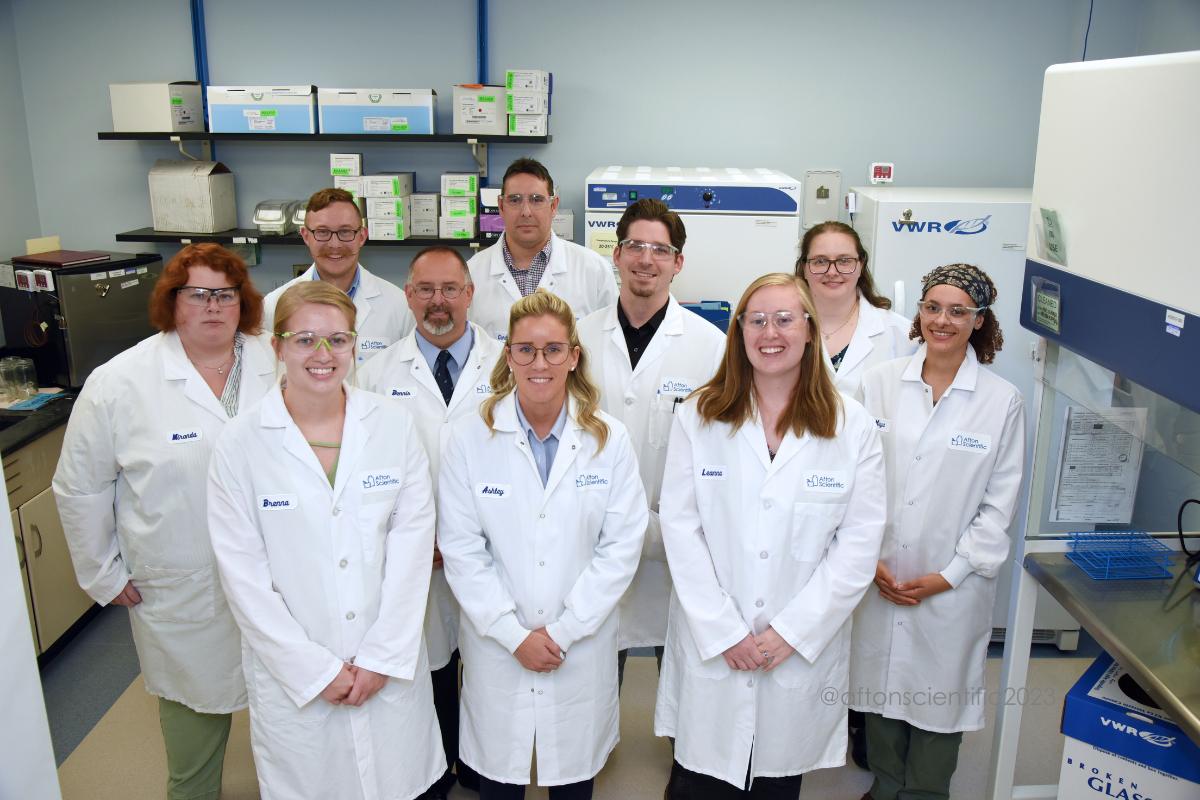
For sponsors focused specifically on sterile injectables fill/finish, the criteria in this framework are best met by a CDMO for whom this work is central to what they do. Afton Scientific specializes exclusively in sterile injectables fill/finish, supporting programs from Phase 1 through ongoing commercial manufacturing. To learn more, visit aftonscientific.com.